
Create a social network
How to create your own social network.
Five steps, on WordPress, with the software free and the members in your own database. The install is the easy part, so this guide spends most of its time on the decisions that actually determine whether anyone comes back.
Looking to schedule posts to Instagram or LinkedIn? That is social media marketing and you want a scheduling tool, not this. This page is about building a network of your own.
The five steps
What creating it actually involves.
-
Get a WordPress site
Skip if you have one.Any host that runs WordPress will do to start. You do not need a big plan on day one, because a new community is a small site. If you already have a WordPress site, you already have this step.
-
Install the community engine
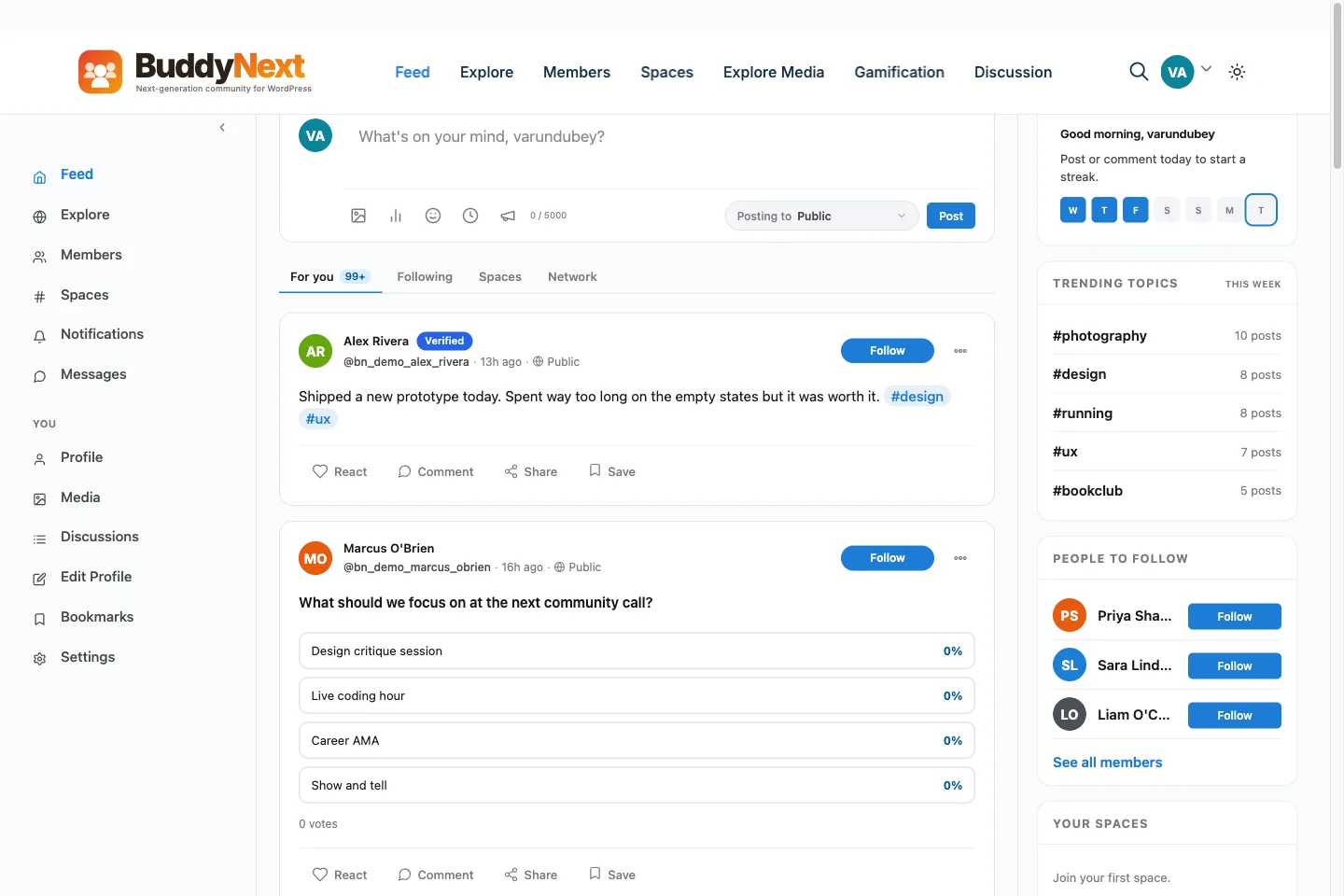
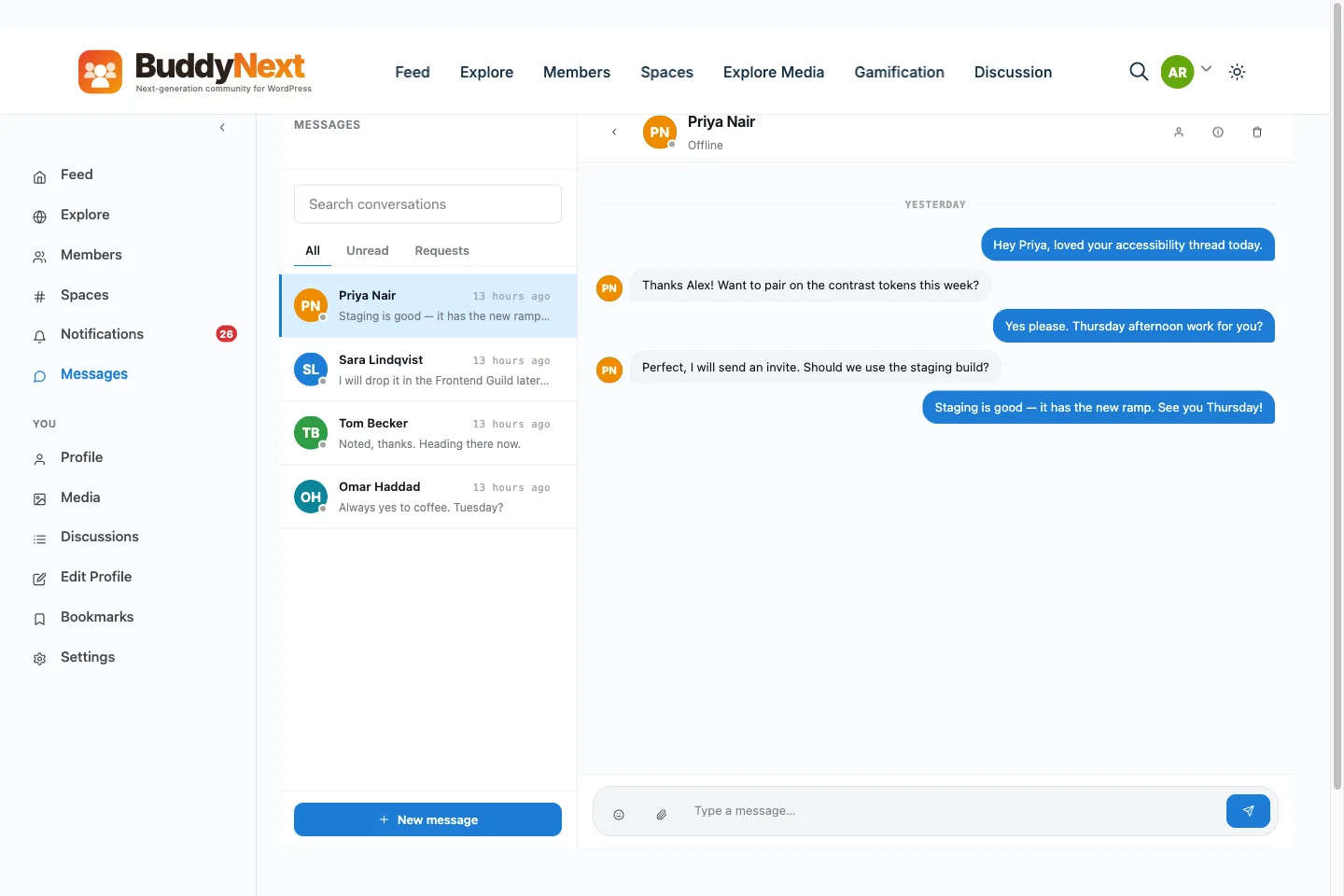
Free, GPL.BuddyNext is a plugin. Installing it adds the feed, member profiles, spaces, messaging, notifications and a moderation queue. Nothing here is a paid upgrade: that list is the free core.
-
Decide what members do
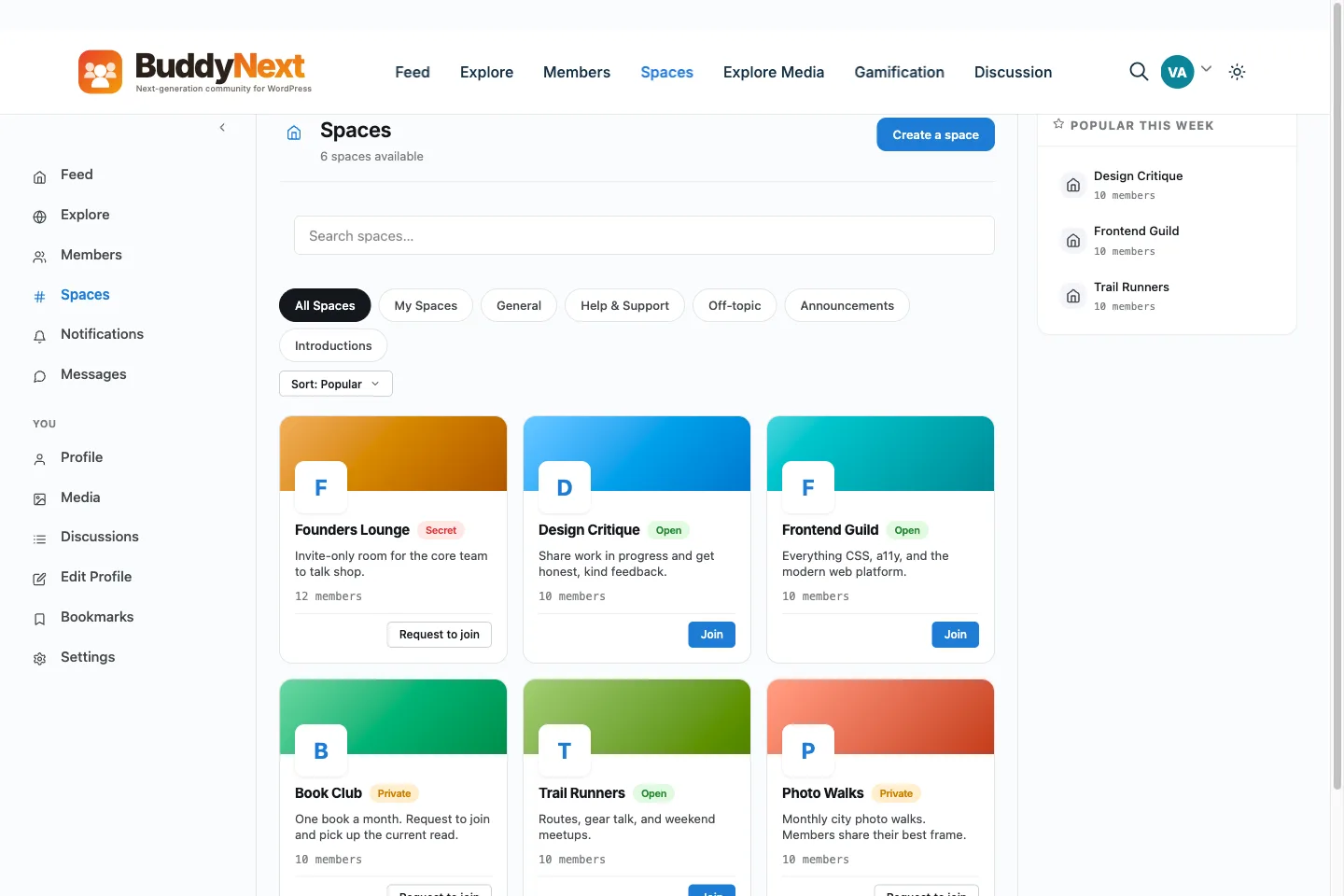
The step that matters.This is the real work and the part that decides whether the network lives. Pick three or four spaces people will genuinely use, not fifteen you can imagine. Empty rooms read as abandoned, and a quiet network is harder to restart than to start.
-
Set up profiles and privacy
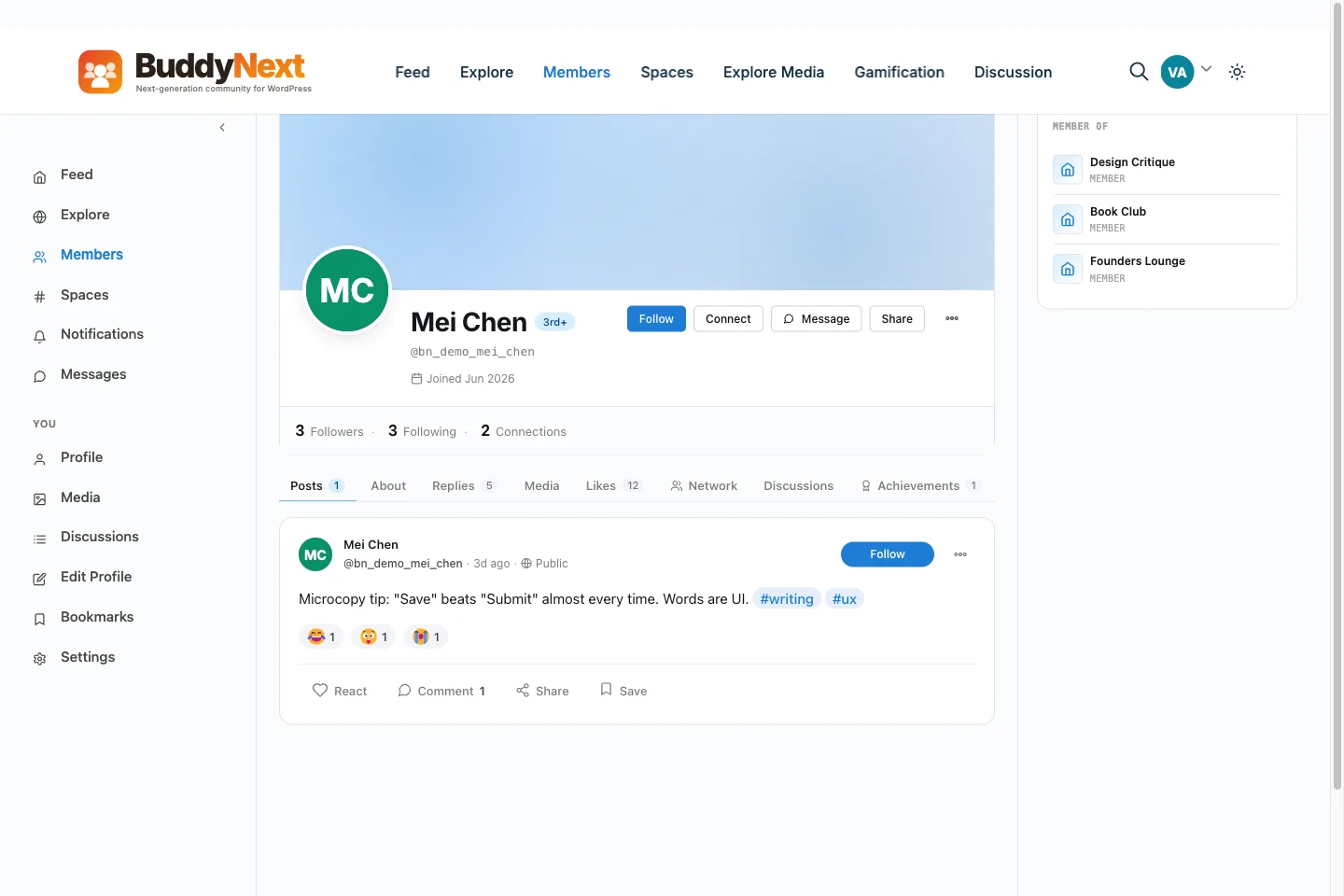
Short beats thorough.Add the profile fields you want, keeping the list short so people finish it, and decide what is public. Members control privacy per field, so you are choosing the defaults rather than the rules.
-
Seed it, then invite
Never invite into silence.Post a welcome and a few starter threads before anyone arrives. A network with a little life invites people in; a blank wall does not. Then invite a first group small enough that every post gets a reply.
Wondering what shape yours should take? There are worked examples of what people build, from alumni networks to marketplaces.
What it costs
Free to build, cheap to run.
The honest numbers, because "affordable" tells you nothing and the gap only shows up once the network works.
- The software
- Free. The core plugin is GPL, and so are the companions for forums, media and gamification.
- Hosting
- Yours to choose. A new community runs on a small plan; you scale it when the traffic is real rather than in advance.
- Per member
- Nothing. This is the difference that compounds: hosted platforms price by member, so growth raises the bill.
- Optional
- Pro from $149 a year adds group and real-time messaging, gated and tiered spaces, and paywalls.
Weighing this against a hosted platform? The platform comparison puts both sides next to each other.
Still deciding what to install, or weighing one engine against assembling the same thing from separate parts? The WordPress social network plugin comparison sets out what the category has to cover before it names a winner.
Where you are now
Pick the sentence that sounds like you.
The right next step is different depending on what you are running today, so here are four, rather than one button for everybody.
-
I have not started yet
Then the fastest way to judge this is to use it. The sandbox spins up a real community you can post in, and you can throw it away afterwards.
-
I pay for Circle, Mighty Networks or Skool
The bill grows with your membership and the members sit on their servers. Moving is the part people assume is impossible, so it is worth reading what it actually involves before you renew.
-
I already run BuddyPress or BuddyBoss
Your members keep their WordPress logins, so nobody re-registers. The free BuddyNext Importer brings the rest across: members, profile fields, groups, activity, forums, media and private messages.
Migrating from BuddyPress Migrating from BuddyBoss What the importer moves
-
I am building this for someone else
A full REST API ships in the free core, so a custom front end or an integration is a first-class path rather than a retrofit. The plugin source is public, so you can read it before you commit a client to it.
See it for real
What you will have built.
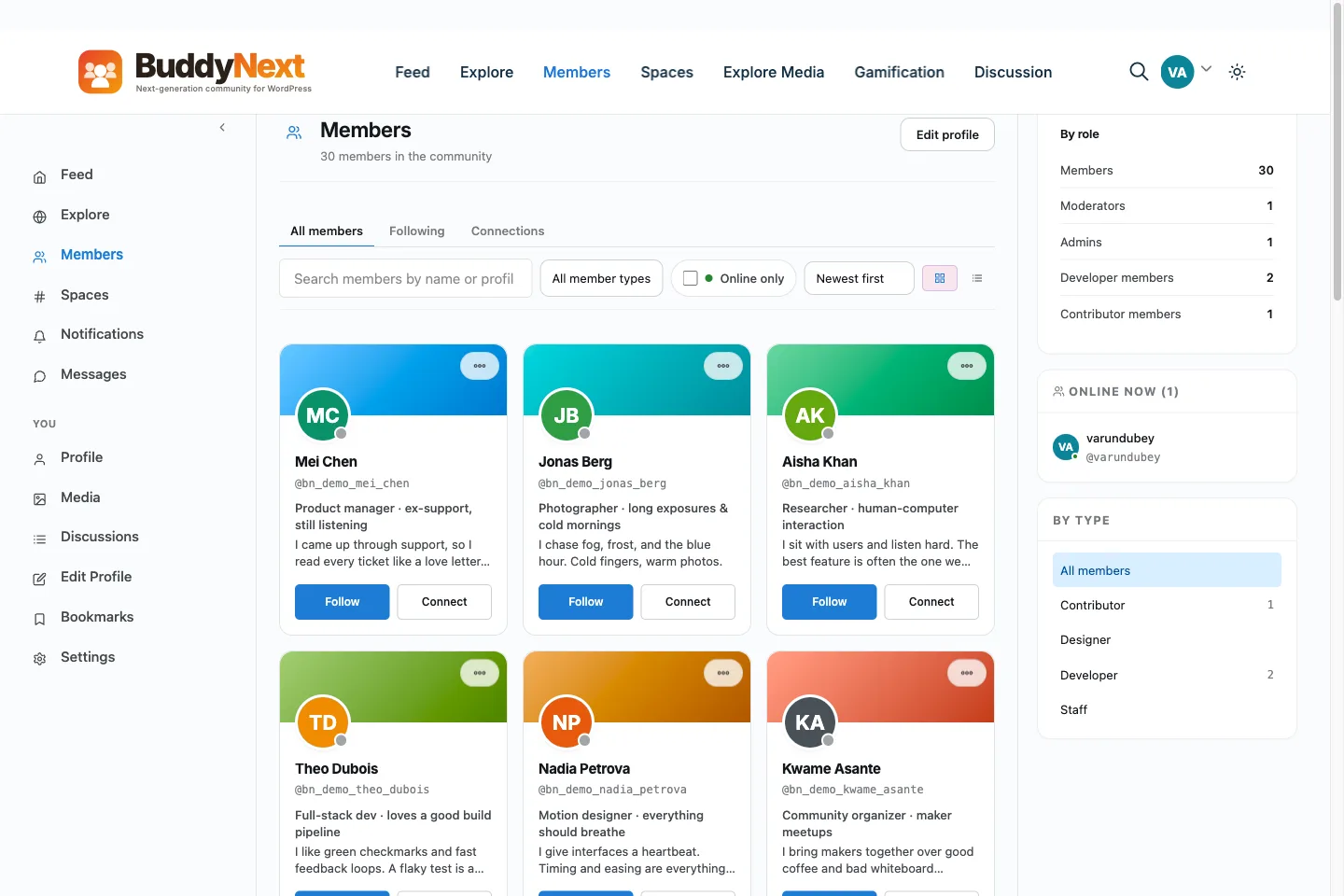
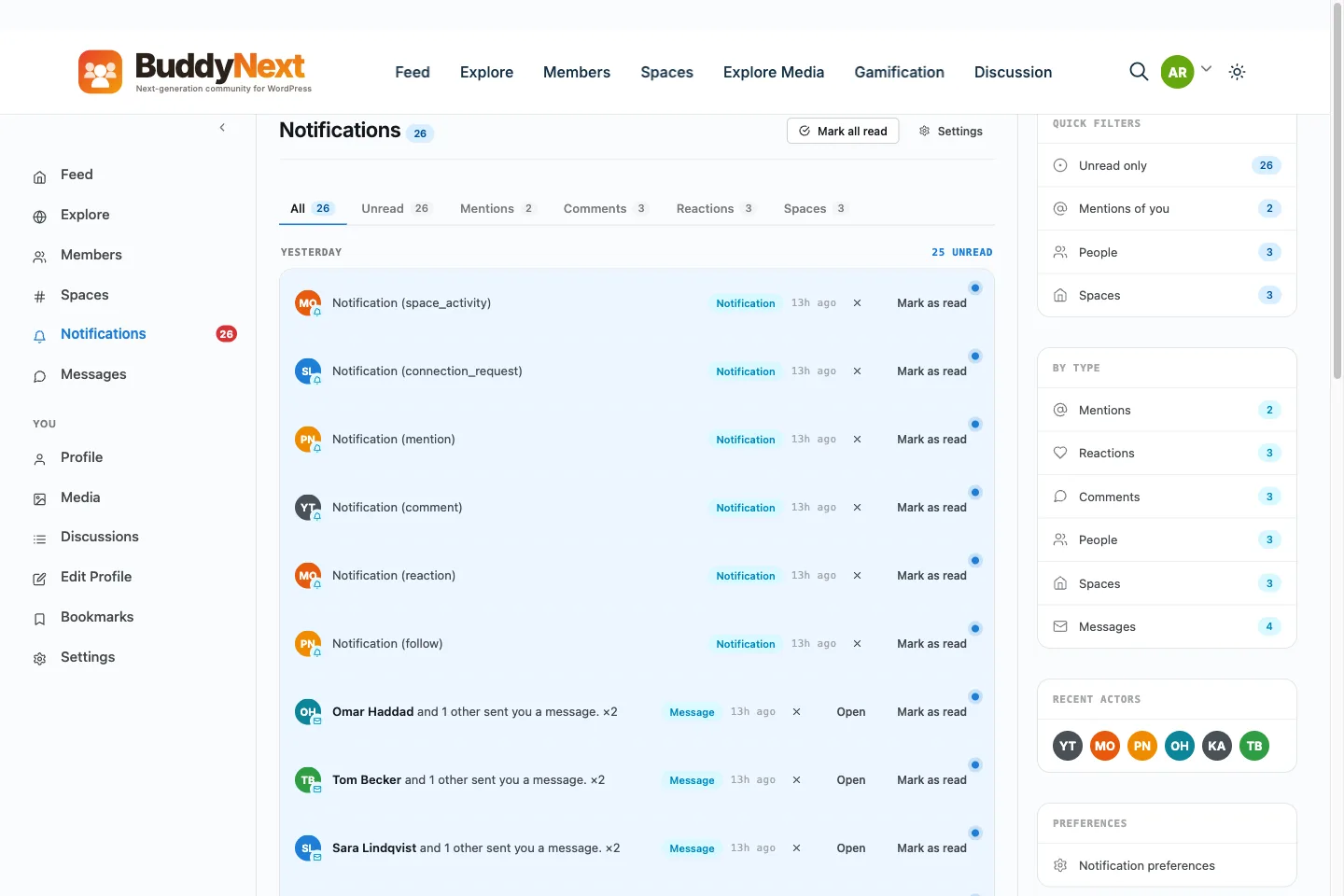
Every screen below is BuddyNext running inside a real WordPress theme. Click any screen to open it full size.
Questions
What people ask before starting.
Can I create a social network for free?
The software, yes. BuddyNext core is free and GPL, as are its companions for forums, media and gamification. You pay for WordPress hosting, which for a new community is a few dollars a month. What you avoid is per-member pricing, which is what makes hosted platforms expensive exactly when the network starts working.
How long does it take?
Installing and configuring is an afternoon. Deciding what your spaces are, seeding the feed and inviting the first group is the part that takes real thought, and it is worth more than the setup. Most networks that fail did the install fine.
Do I need to know how to code?
No. Installing a plugin and choosing your spaces is admin work. Code becomes relevant only if you want a custom front end or an integration, and a full REST API ships in the free core for that.
Is this for social media marketing?
No, and it is worth saying plainly. If you want to schedule posts to Instagram, X or LinkedIn, you want a scheduling tool and this is not one. This is for building a network of your own, where your members post to each other rather than to an algorithm.
What is the difference between this and a Facebook group?
Ownership and reach. A group lives on someone else platform, which decides who sees what and can change the rules or close it. A self-hosted network runs on your hosting with your members in your database, and everyone who joins actually sees what is posted.
How many members do I need to start?
Fewer than you think, and invited in a group rather than all at once. A first cohort small enough that every post gets a reply builds the habit. A launch to thousands who each see silence does not.
Is making a social website the same as creating a social network website?
The same job under different names. Whichever phrase you searched, the steps do not change: a WordPress site, a community engine installed on it, a few real spaces, and a seeded feed before you invite anyone. The five steps on this page cover all of it regardless of which term you started from.
Do I need special WordPress social platform software, or does a normal WordPress site work?
A normal WordPress site is the starting point. There is no separate social edition of WordPress to buy. A regular WordPress site becomes a WordPress social site the moment a community engine like BuddyNext is installed on it, the same way it becomes a store the moment WooCommerce is installed. If you already run WordPress for anything else, you already have this part done.
Can I turn an existing WordPress site into a social network?
Yes, and that is the more common starting point than a fresh install. Adding BuddyNext to a WordPress site you already run puts a social network on WordPress without moving anything that is already there. The one thing worth checking first is that your theme leaves room for a feed and a member directory, since some single-column blog themes do not.
Watch the full walkthrough
See a social network built, start to finish
Long-form, step-by-step video guides: complete setup, a full product tour, a course community, a paid membership, moderation, and a new member's first week.
Start with step two.
If you already have a WordPress site, the install is the next thing you do.
Keep reading
- Online community platform
What a community platform has to do, and what changes once you host it yourself.
- WordPress social network plugin
What a social network plugin has to include before it can replace a stack of add-ons.
- Community website builder
Building the site around the community, including the parts that are not the plugin.
- Membership site on WordPress
The two kinds of membership site, and which software each one actually needs.
- WordPress membership plugin
Charging for access to the community itself, and where that differs from gating content.